
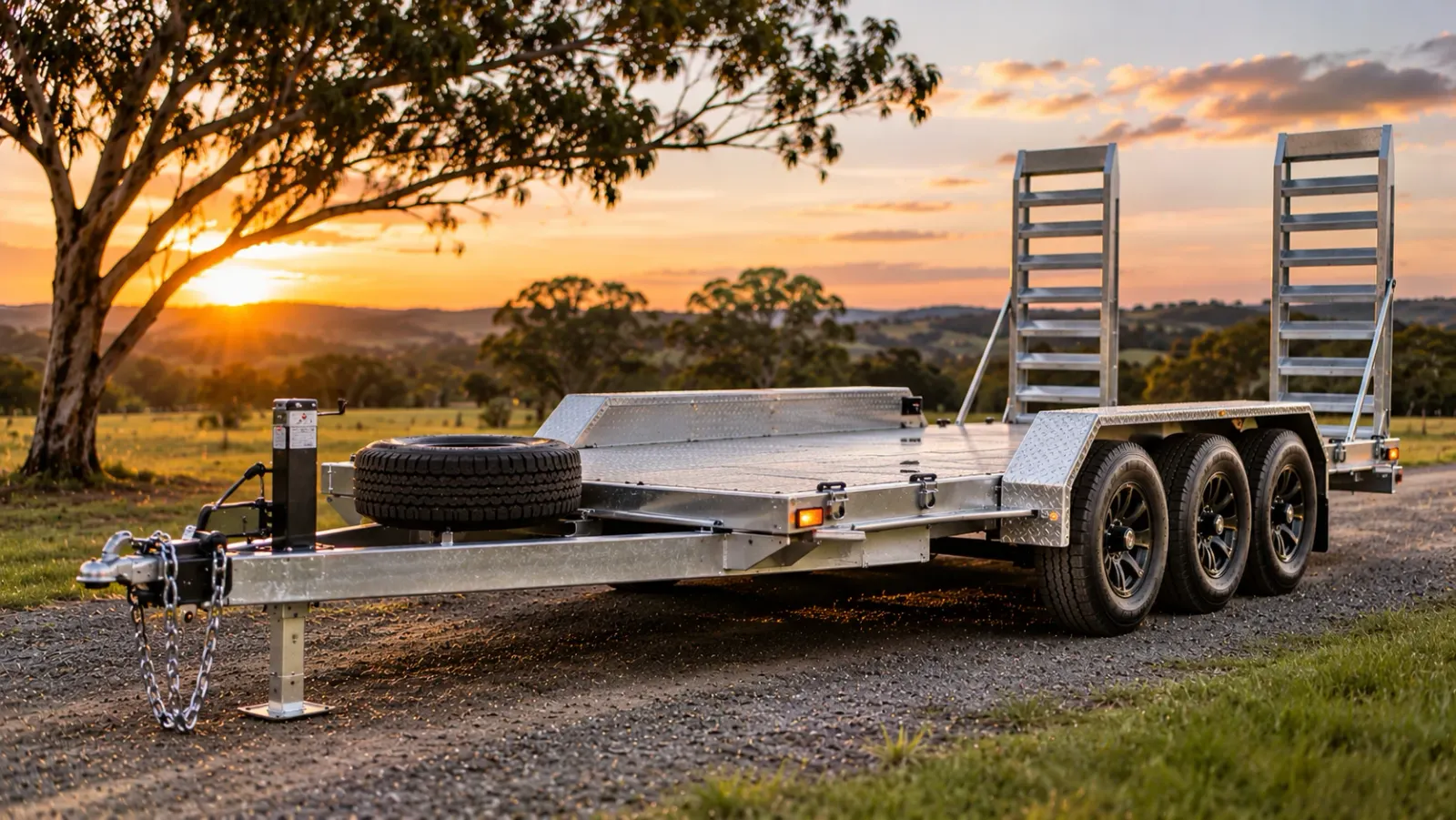
Home / Trailer types
Five used trailer types, five checklists
Different trailers fail in different places. This page is general information to help you ask better questions; it is not a substitute for a proper inspection.
 01
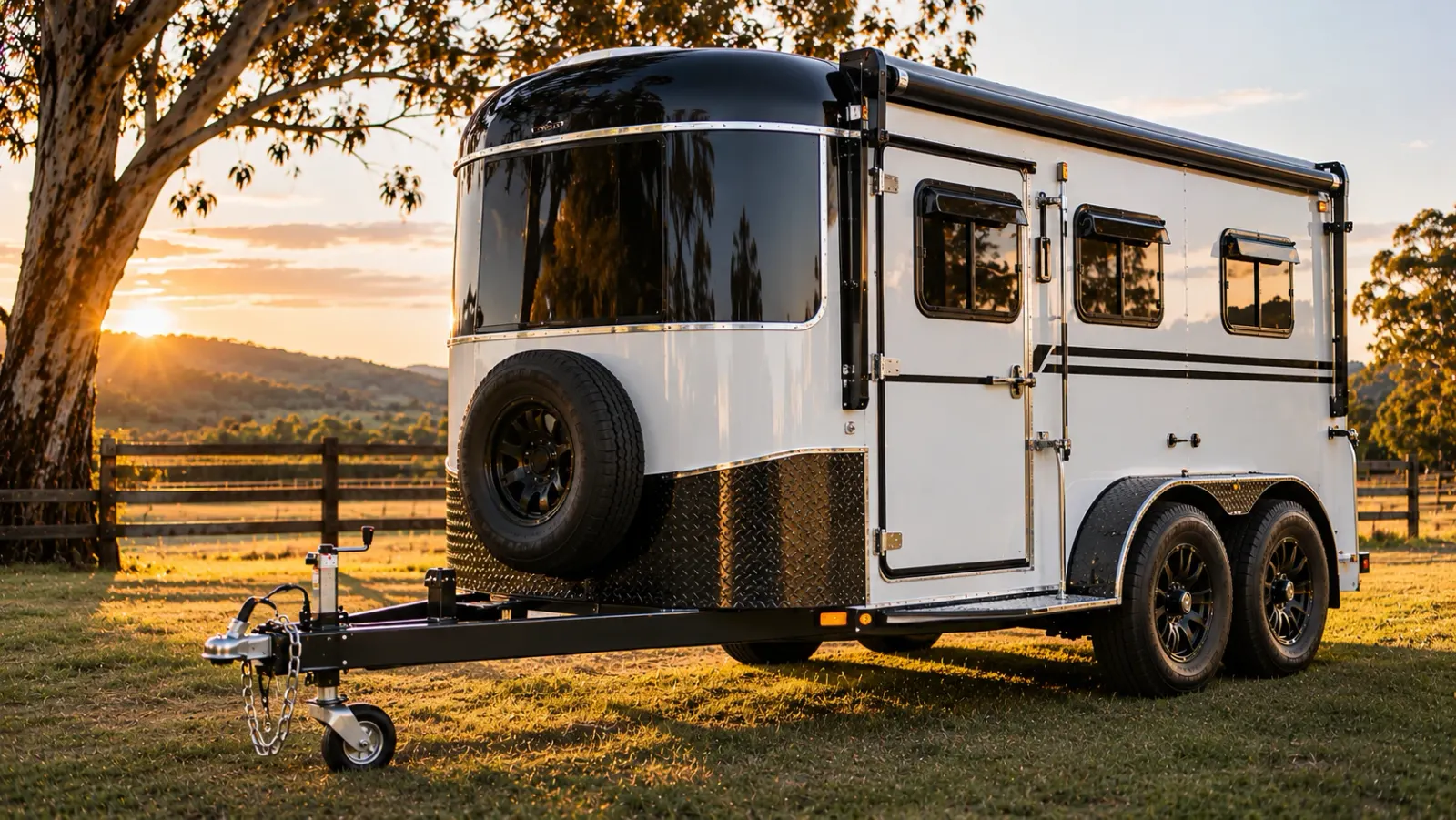
Horse floats
- Floor
- Ramp and springs
- Partitions
- Roof
The floor is the headline item. Matting can hide rot or corrosion in the floor underneath, so lift it if the seller allows. Look at the ramp hinges and springs, the partition and breastbar latches, the roof and any leaks, and the condition of the padding where animals could rub or knock. A float is often an emotional purchase, so bring a checklist and a second opinion.
- Lift mats; check the floor from underneath
- Test ramp operation and springs
- Check coupling, safety chains and brakes
- Look for water stains inside the roof
 02
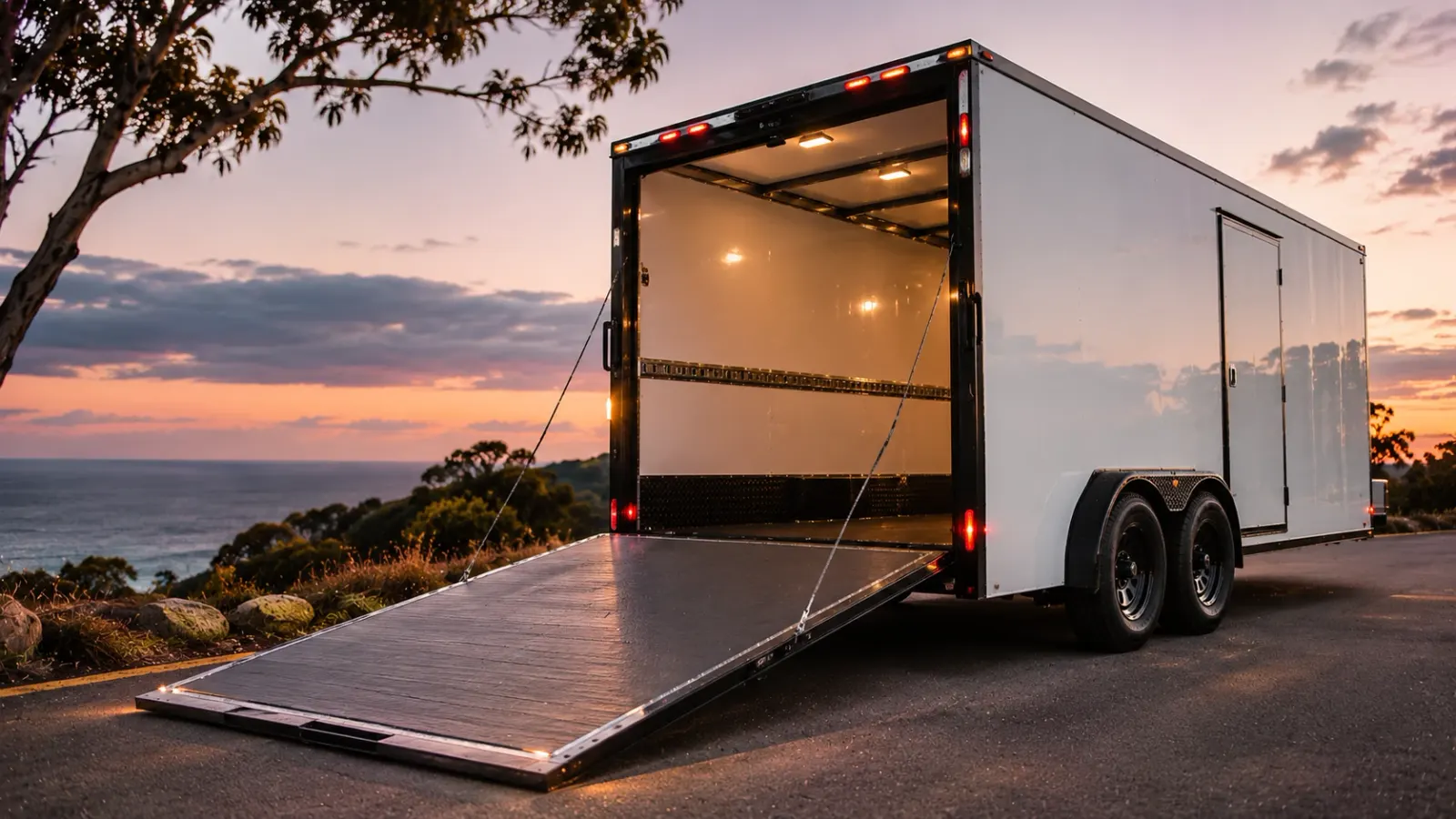
Tradie and enclosed trailers
- Fit-out
- Wiring
- Seals and locks
- Floor wear
Here you are often buying a fit-out as much as a trailer: racking, shelving, power points, lighting. Ask what is included in the price and what is a custom job that only suits one trade. Check the door seals and locks, the roof for dents and leaks, and the floor for wear from heavy tools. A tidy interior is a good sign, but still look under it.
- Is the racking fixed, and does it come with the trailer?
- Any wiring should be neat, safe and checked by a licensed electrician
- Look for sagging floors near the axle
 03
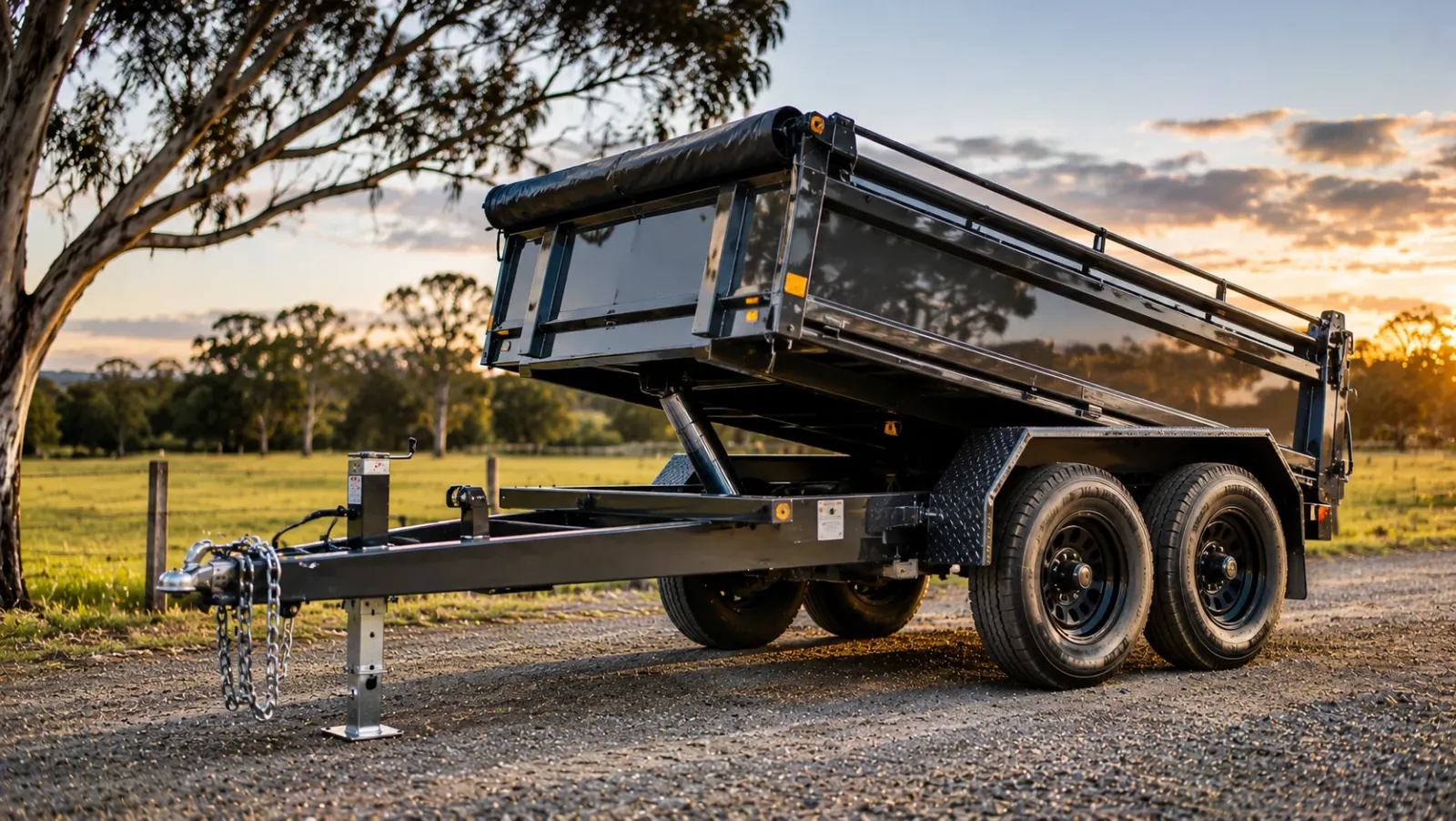
Tipper trailers
- Hydraulics
- Hoses
- Hinge pins
- Tailgate
Hydraulics are the expensive part. With the seller present, tip the body fully, hold it, and lower it, watching for leaks, slow movement or noise. Check hoses for cracking, the pump and battery, and the hinge pins and body for wear. Dried-on material and heavy rust around the tipping frame can mean hard use.
- Operate the tipper from empty to full lift
- Look for oil on rams and under the drawbar
- Check the tailgate catches and chains
04Car trailers and tilt trailers
- Deck
- Ramps or tilt
- Winch
- Tie-downs
- Rated capacity
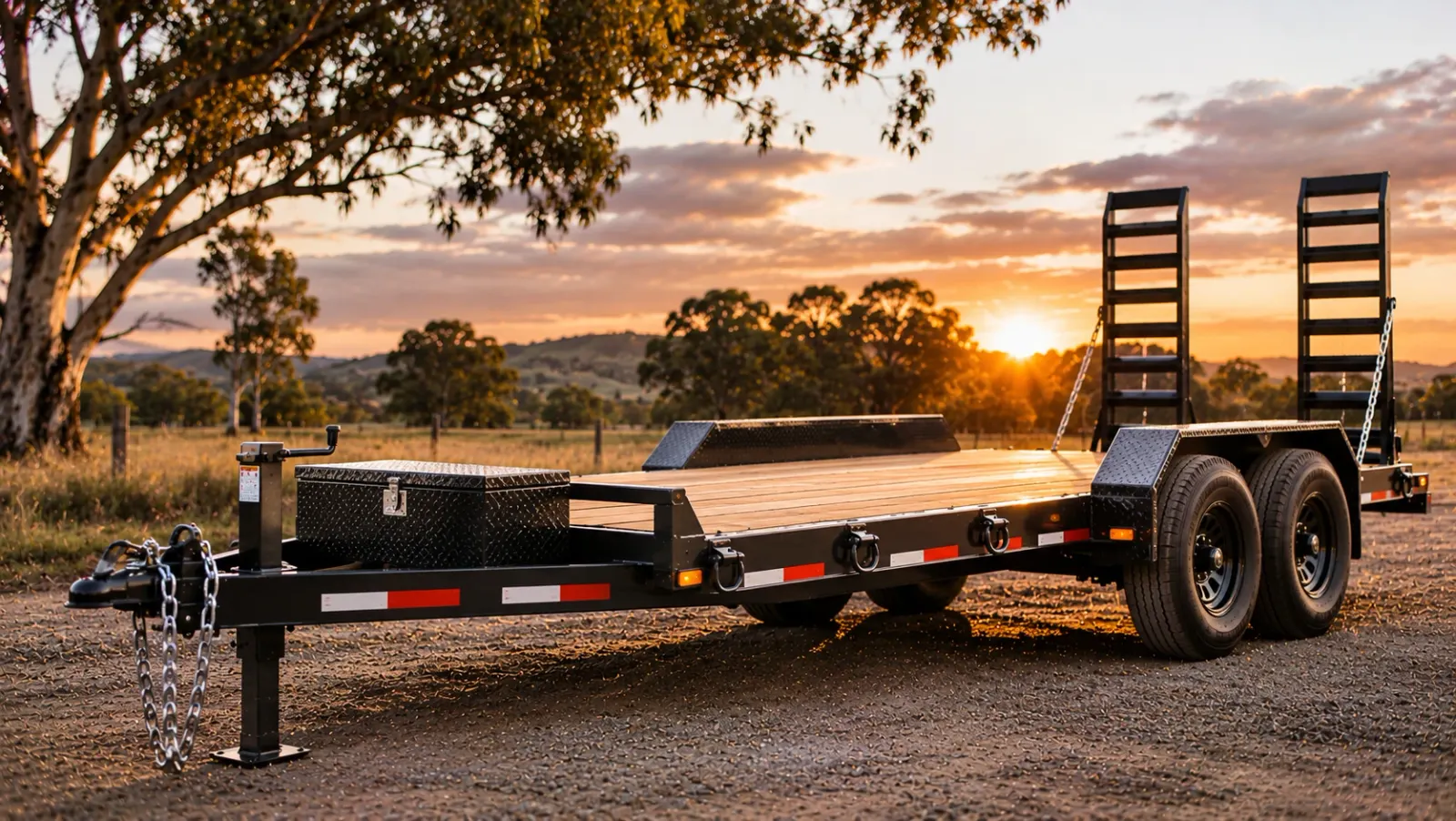
Check the deck for cracks and bent members, the ramps or tilt mechanism, the winch and strap condition, and the tie-down points. Ask about the rated capacity and make sure the plate agrees. Tyres that are old but low-tread-wear are a trap: age matters as much as tread.
- Operate the tilt or ramp several times
- Check the winch cable or strap for fraying
- Weigh the car you plan to carry against the plate
 05
Box trailers
- Drawbar
- Tailgate
- Bearings
- Lights
The simplest trailer is also the easiest to get complacent about. Check the drawbar for bends, the tailgate hinges, the wheel bearings for play and the lights for a full working set. Many have been repaired by owners, so look at welds and any non-original parts. Tandem axle models add brakes and suspension wear to the list.
- Spin each wheel; listen for grinding
- Check the lights, indicators and brake lights work on your car’s plug
- Inspect the floor and sides for rust-through